

Ayurveda, the ancient Indian science of life, does not view health as a phenomenon limited to the human body. It is an ecological science—one that understands the human organism as an extension of its environment. Long before modern disciplines like environmental physiology, psychoneuroimmunology, and climate medicine emerged, Ayurveda articulated a simple but profound truth: the land we inhabit, the air we breathe, the water we drink, and the rhythms we live by shape our health more deeply than any single medicine.
In classical Ayurvedic literature, Desha (geography), Kala (time and season), and Prakriti (constitution) form a triad that governs disease susceptibility, therapeutic response, and longevity. Yet, in modern healthcare systems—and even in much of contemporary Ayurveda practice—this ecological intelligence has been fragmented or ignored.
In this context, the concept of Oceanic Ayurveda emerges not as an innovation, but as a rediscovery of Ayurveda’s deepest ecological wisdom, uniquely embodied in island geographies such as the Andaman & Nicobar Islands.
This blog explores how the synergy of ocean, marine climate, Panchamahabhuta balance, and Rasayana-oriented healing makes Andaman & Nicobar Islands India’s only truly authentic Ocean-based Ayurveda destination, both in wisdom and in potential.
Oceanic Ayurveda is not simply Ayurveda practiced near the sea. It is Ayurveda embedded within an ocean-dominated ecosystem, where the sea is not a backdrop but a constant physiological, psychological, and elemental influence.
| Parameter | Continental Ayurveda | Coastal Ayurveda | Oceanic Ayurveda (Islands) |
| Relationship with sea | Distant | Adjacent | Omnipresent |
| Air quality | Variable, polluted | Moderately saline | Highly ionized, ultraclean |
| Climate volatility | High | Moderate | Low |
| Panchamahabhuta balance | Often distorted | Partially balanced | Naturally harmonized |
| Therapeutic emphasis | Disease treatment | Detox & rejuvenation | Recovery, reset & regeneration |
Most Indian Ayurveda tourism models operate either in continental plains or coastal belts. Andaman & Nicobar Islands are different: they represent a complete oceanic ecology, where land, air, water, light, and space are all shaped continuously by the sea.
This distinction is not cosmetic—it is therapeutically decisive.

Charaka Samhita emphasizes that disease expression and treatment response vary according to geography:
“Deshaḥ puruṣasya prakṛti-viśeṣa-karaḥ”
Island geographies fall under Anupa Desha—regions characterized by:
These features are considered Vata-shamana and Pitta-santulana by nature.
The Modern Epidemic of Vata–Pitta Disorders
Globally—and particularly in India’s urban population—the dominant disease burden today is Vata–Pitta driven:
According to the Global Burden of Disease (GBD) 2023, stress-related and inflammatory disorders account for over 60% of non-communicable disease morbidity worldwide.
Urban environments aggravate:

The marine climate in island environments provides a natural doshic correction:
| Marine Factor | Ayurvedic Effect |
| Stable temperature | Pacifies Vata |
| Saline humidity | Softens tissues, calms Vata |
| Ocean breeze | Regulates Prana Vata |
| Diffused sunlight | Supports Agni without Pitta aggravation |
Findings obtained from scientific studies indicate that the climate for coastal regions and islands is
These affect:
From the Ayurvedic point of view, this means stable Prana Vata and harmonious Pachaka Pitta. This is nothing short of the foundation of healing.
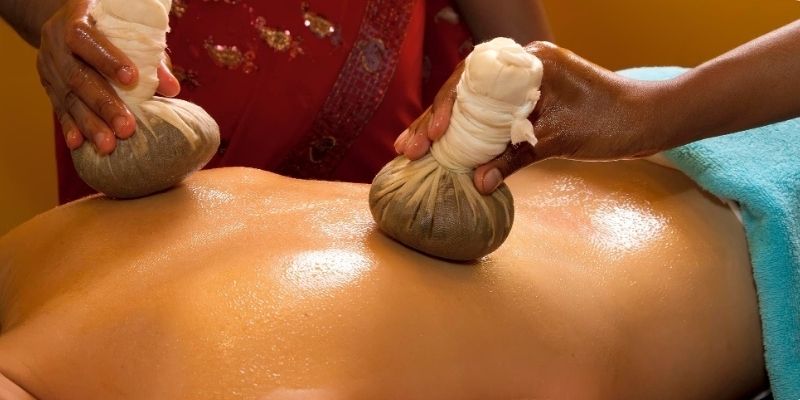
Reinterpreting Thalassotherapy Through Ayurveda
Thalassotherapy Thalassotherapy is a recognized trend in the European medical tradition that comprises healing with air, water, minerals, and sunlight of the sea. Thalasso-Ayurveda formulates this paradigm within the epistemology of Ayurveda.
It also incorporates:
There are more negative ions in marine air than in desert air. These negative ions are produced by the motion of waves and wind. Research articles in the International Journal of Biometeorology illustrate that negative ions affect the following:
Ayurvedically:
This makes Oceanic Ayurveda particularly effective for:

Lavana Rasa, when balanced, is described in Ayurveda as:
The natural saline aerosol environment of islands:
This explains why island climates are historically associated with:
Island sunlight differs from mainland heat:
This allows:
In Ayurvedic terms, it supports Samagni, not Tikshnagni.
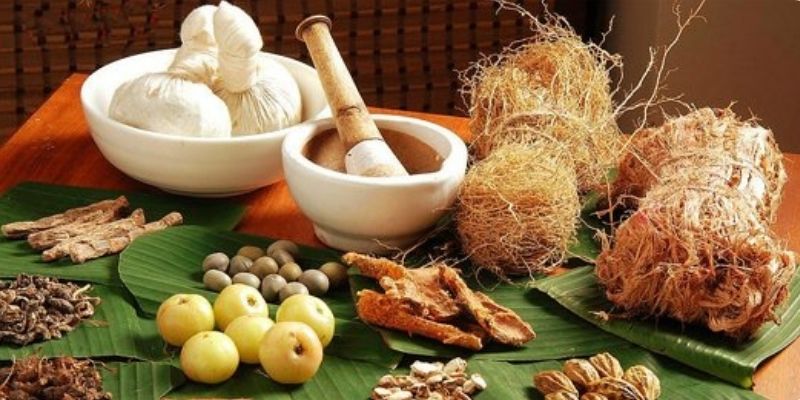
Ayurveda believes that health is the dynamic equilibrium of the five Mahabhutas. The current environment throws this equilibrium completely off.
| Mahabhuta | Island Manifestation | Therapeutic Impact |
| Prithvi | Dense forests, mineral soil | Grounding, Vata pacification |
| Ap | Ocean, rain, humidity | Tissue nourishment |
| Tejas | Gentle sunlight | Metabolic regulation |
| Vayu | Constant breeze | Prana circulation |
| Akasha | Open horizon, silence | Mental expansion |
In urban settings, Tejas and Vayu are excessively present in an unnatural way, while Ap and Prithvi are a deficit or lack in those locations. Island geographies restore elemental proportion.
Balanced Mahabhutas lead to:
This is why patients experience such high levels of healing within a short period of time in is

From Disease Management to Regeneration
The contemporary healthcare system is adept at dealing with acute care but not adept at dealing with the process of ‘recovery, resilience, and regeneration’. The answer to the above is provided by the Ayurvedic system
Oceanic environments enhance Rasayana efficacy by:
Examples of Oceanic Rasayana Applications
| Condition | Oceanic Advantage |
| Post-COVID syndrome | Lung + immunity recovery |
| Burnout & fatigue | Nervous system reset |
| Geriatric weakness | Vata pacification |
| Women’s hormonal imbalance | Endocrine stabilization |
Observations of clinical experiences at wellness retreats world over tend to give credence to the aspect of environment contributing to nearly 40% of the outcomes of treatment.
Not Merely Coastal—Truly Oceanic
These regions are the coastlines of Kerala, Goa, Gujarat, and Tamil Nadu. They are, however, associated with the continental factors of population density, urbanization, and pollution.
Andaman & Nicobar Islands provide:
Natural Isolation Favorable to Healing This makes them ecologically incompable

In addition tourism, Oceanic Ayurveda also represents:
It aligns perfectly with the following as well:
Oceanic Ayurveda must grow responsibly which implies:
Quantity must never be chosen over quantity.
Oceanic Ayurveda is a perpetual reminder that the practice of healing is often a matter of being allowed to heal. Healing is Allowed by:
The Andaman & Nicobar Islands stand as India’s last unfragmented ecological healing canvas, where Ayurveda can express its full civilizational depth, not merely as therapy, but as a way of living.
In an age of overstimulation and fragmentation, Oceanic Ayurveda offers what humanity seeks most—not novelty, but return.

🖋️ Dedicated blog writer 📚 | Crafting engaging content through the art of words. 🌍 Passionate about exploring diverse topics and sharing insightful perspectives. 🚀 Turning ideas into captivating stories. ☕ Coffee addict and creativity enthusiast. 🎨 Let’s embark on a journey of discovery through the magic of writing!
